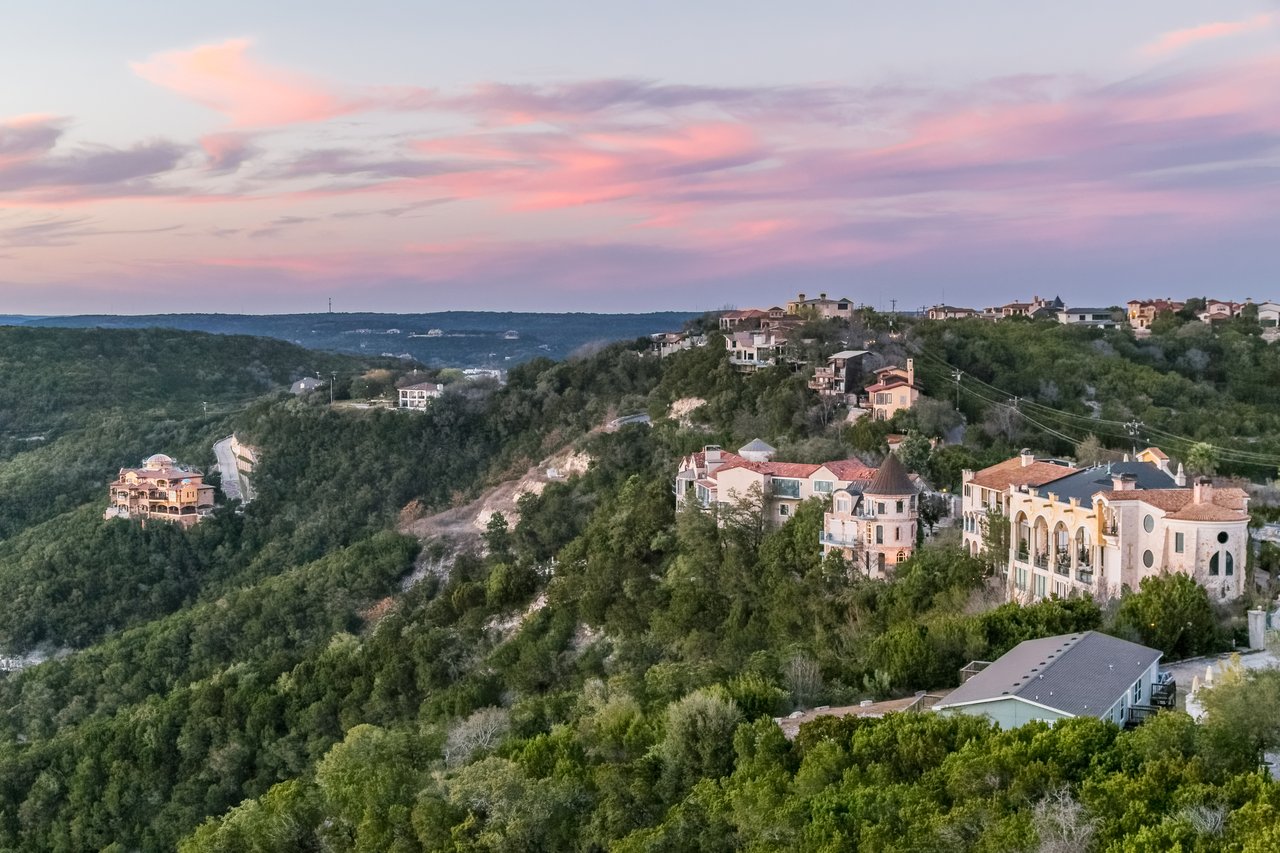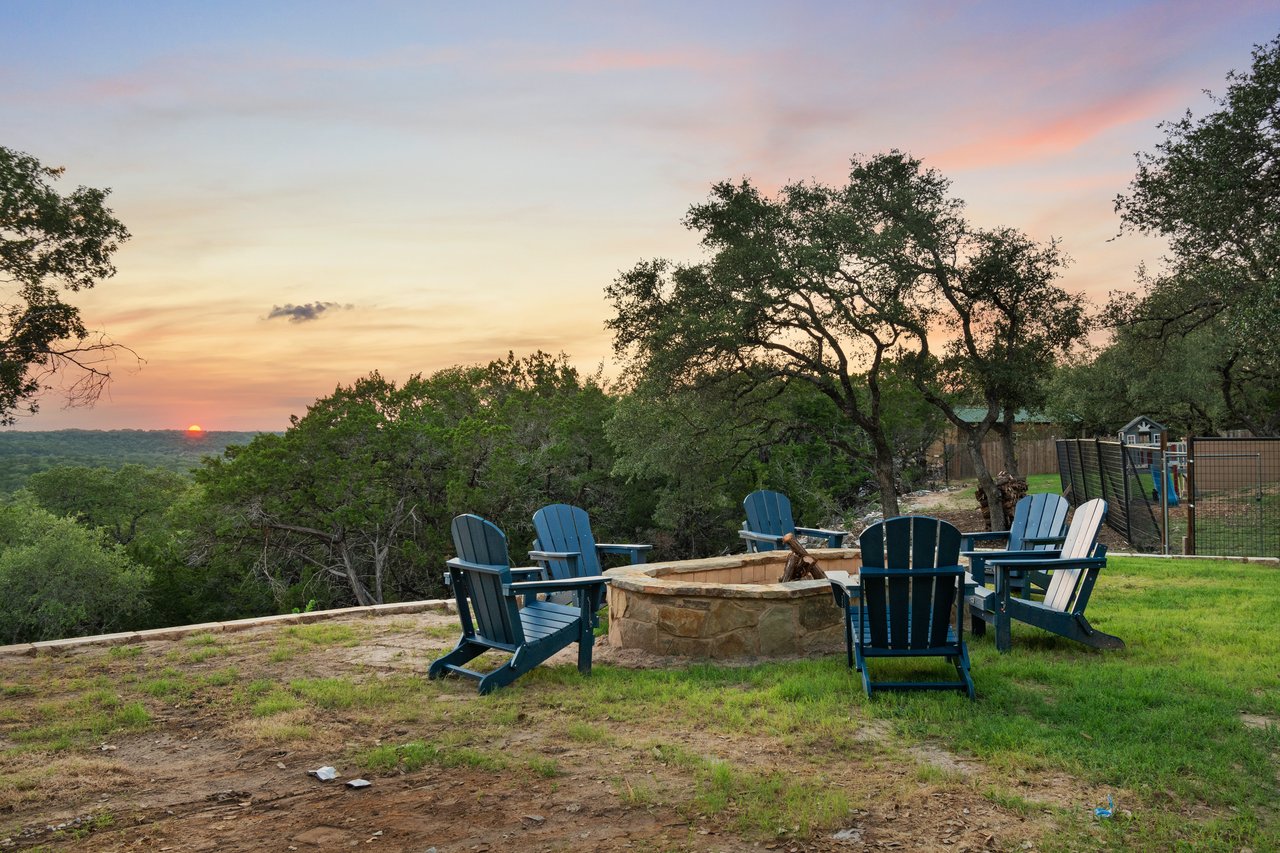
Dripping Springs in 60 Seconds
If you're researching the move out to Dripping Springs, here's the version we wish someone had handed us first:
-
30 minutes from downtown Austin on US-290 — close enough to keep the city, far enough to keep your privacy
-
Dripping Springs ISD is frequently ranked the #1 school district in Texas — for a lot of families, that single fact ends the conversation
-
April 2026 median sale price: $575,750 (second-highest in the Austin metro). Sales volume is up +70.6% year over year
-
Luxury homes $1.2M+ on acreage are holding their value — you can't manufacture more Hill Country views
-
The market right now favors buyers: 7.9 months of inventory and 116 days on market, with motivated sellers willing to negotiate
If you're feeling the pull west, you're not imagining it. We're Lindsey and Paul Daniels — Lindsey grew up in Dripping Springs — and this is the guide we walk our clients through.
The Drive: What "30 Minutes From Austin" Actually Feels Like
Most relocation guides treat the commute like a single number. It isn't.
From the heart of Dripping Springs to downtown Austin, US-290 covers the run in about 30 minutes off-peak. Add 15-20 minutes at evening rush; less if coming into town in the morning. If you work west of Mopac or anywhere in the SoCo/South Lamar/Bouldin Creek corridor, your commute can actually beat what someone living in north Austin experiences.
The honest tradeoff: you give up walking to a coffee shop and you gain stars in the night sky. Restaurants, music, weekend culture — all 30 minutes east. Schools, acreage, ranch life, and the Hill Country backdrop — all in your driveway.
For our clients moving from urban Austin neighborhoods, the most common piece of feedback after six months is some version of: "we expected to miss the city more - and just don’t"
Schools: Why DSISD Anchors Almost Every Move
Dripping Springs ISD has been ranked among the top public school districts in Texas for years, and frequently lands at #1. That's the headline. The texture under it matters too.
The basics:
-
Walnut Springs Elementary, Dripping Springs Elementary, Sycamore Springs Elementary, Cypress Springs Elementary — your home address determines your zone
-
Dripping Springs Middle School, Sycamore Springs Middle School
-
Dripping Springs High School — the only DSISD high school; growth means a second is in long-term planning
What surprises people: DSISD's competitive standing isn't about pre-AP-everything academic pressure. The culture leans on outdoor athletics, ranch-life community involvement, and small-town accountability. Families coming from highly-ranked Austin Eanes ISD often describe DSISD as "the same ratings, half the intensity."
If you have specific elementary zones in mind, ask us before you tour — house-to-school zoning shifts every couple years as the district grows.
The Lay of the Land: Established Pockets and New Communities
Dripping Springs broke into the national consciousness as "the next Austin" around 2018. The decade since has produced a layered market with very different price points and lifestyle feels.
The established core:
-
Downtown Dripping Springs / RR 12 — Mercer Street, Hamilton Pool road, walkable wine bars, true small-town feel
-
Dripping Springs Ranch Estates — larger lots, mature trees, longer-tenured neighbors
The new generation (2025-2026 inventory):
-
Double L Ranch — a 1,600-acre luxury community delivering ~2,200 homes alongside parkland and high-end builders. Lots are starting to release mid-to-late 2026. This is the marquee development in the area
-
Big Sky Ranch — affordable-to-move-up homes near downtown DS with notably lower property tax exposure
-
Wild Ridge — Big Sky's sister community, ~900 homes on natural land with scenic parks and rolling topography
-
Parten — a destination for buyers who want the upscale build quality without sacrificing Austin access
Master-planned communities (amenity-rich, family-leaning): If you're moving with kids and want a turnkey "amenity neighborhood" — pools, trails, parks, community events, and in some cases golf or equestrian access — Dripping Springs and the surrounding Hill Country corridor has built out a strong lineup over the last decade:
-
Belterra — one of the largest and most established master-planned communities in the area, with an amenity center, pools, miles of trails, and a built-in elementary school
-
Highpointe — gated, with golf, trails, and a strong family-life rhythm; popular with executives commuting to west Austin
-
Caliterra — newer master-plan along the creek with on-site amenities and a tight community feel
-
Headwaters — sustainability-focused, native landscaping, deep amenity package, weekly community programming
-
Ledgestone — quieter, well-priced, family-leaning with pool/clubhouse and a good elementary feeder
-
Polo Club — the equestrian option; if your lifestyle includes horses or you want to be on land that does, this is the standout
The right neighborhood depends almost entirely on what you want from the land. Acreage and views? Look at established estates and the Double L Ranch tier. Walkability and downtown DS energy? Stick close to RR 12. Amenity-rich family living? The master-planned communities above. Move-up housing at sub-$700K? Big Sky and Wild Ridge get you there.
The right neighborhood depends almost entirely on what you want from the land. Acreage and views? Look at established estates and the Double L Ranch tier. Walkability and downtown DS energy? Stick close to RR 12. Move-up housing at sub-$700K? Big Sky and Wild Ridge get you there.
What Your Money Buys, Tier by Tier
Dripping Springs is more elastic at the price point than people realize. A snapshot of the current (April 2026) market:
$400K – $600K (entry to median): 3-4 bedrooms, 0.15 to 0.5 acre lots, primarily new construction in Big Sky / Wild Ridge / similar planned communities. Strong build quality, less customization, easier mortgages.
$600K – $1M (move-up): 3,000-4,500 sq ft on 0.5 to 1 acre. Often custom-light or semi-custom builds. This is the most active price range in the market right now and where most family relocations land.
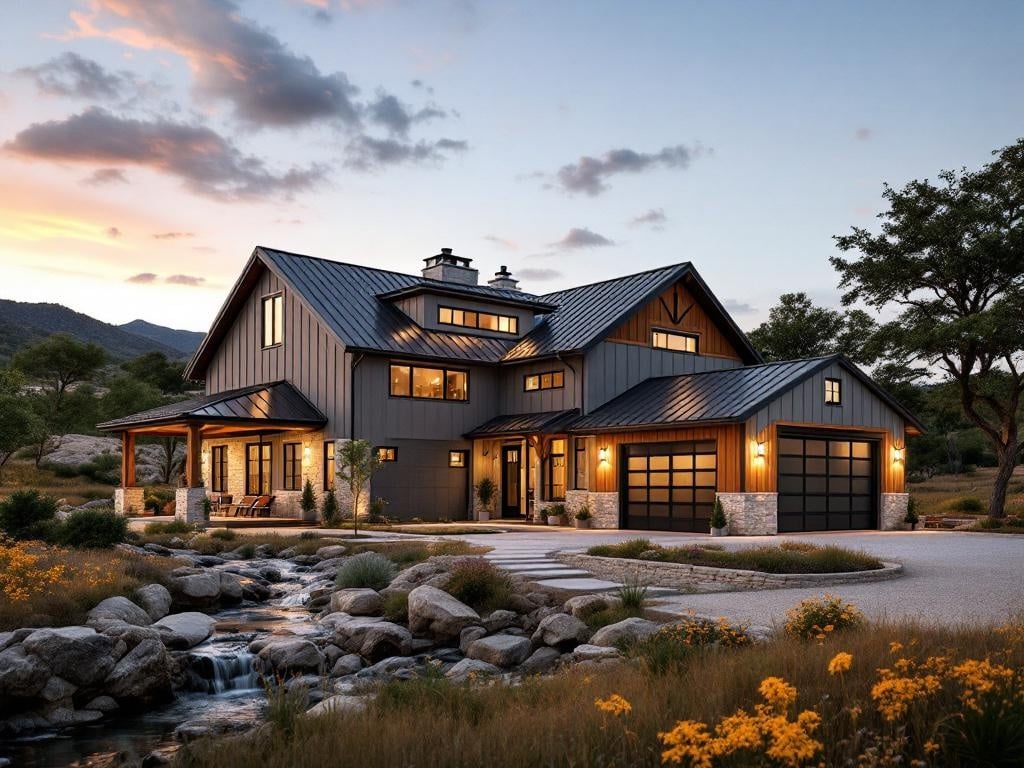
$1.2M+ (luxury): Larger acreage (1-15+ acres), custom builds, ranch architecture, often with views, well water, equestrian-ready features. This tier is the most stable part of the Dripping Springs market — limited inventory of true Hill Country acreage means values hold even in soft conditions.
If you're shopping at the high end, the conversation we have with clients is less about "what does it cost" and more about "which kind of land are you actually buying" — sloped versus level, mature trees versus open pasture, view orientation, water rights, ag exemption status. The number on the listing sheet hides most of the value.
The Hill Country Lifestyle: What People Actually Move Here For
Schools are the gate. The lifestyle is why families stay.
Weekend culture:
-
Wineries and breweries — Solaro Estate, Salt Lick Cellars, Treaty Oak, Jester King. The Dripping Springs trail has matured into a legitimate destination
-
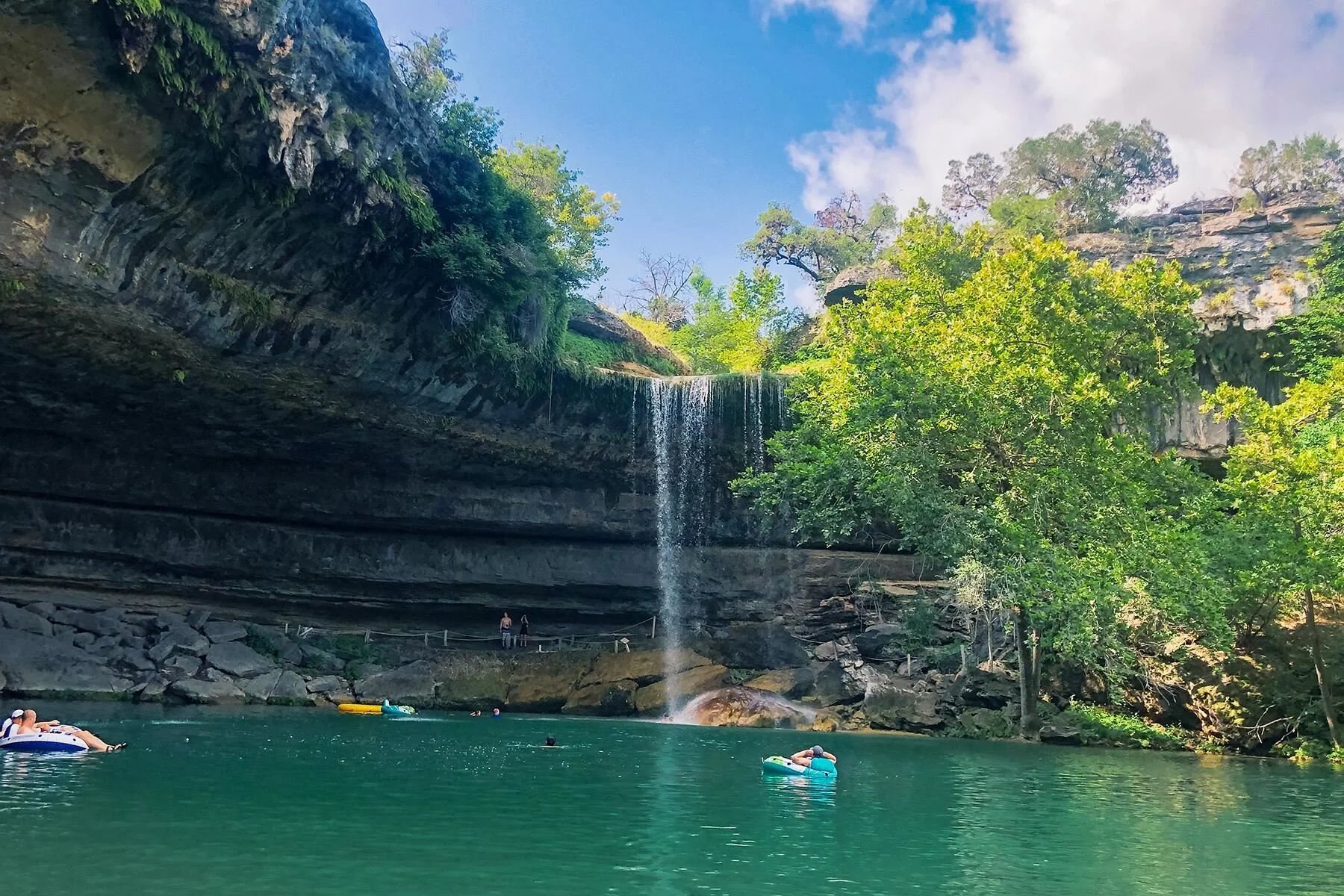
Hamilton Pool Preserve — yes, it requires reservations; yes, it's worth it
-
Pedernales Falls State Park — quieter alternative to Hamilton, swimmable when river levels cooperate
-
Mercer Street — Dripping Springs' walkable downtown, with Mercer Dance Hall, Hi Sign Brewing, restaurants
The food: Tillie's at Camp Lucy is the special-occasion staple. Trattoria Lisina, Rolling in Thyme & Dough, Mercer Street Tavern, Pieous, Nectarine, Alchemy, and Salt Lick BBQ all rotate as locals' favorites. Austin foodies are surprised at how good the scene already is.
Outdoor: Cycling, trail running, equestrian — the Hill Country's geography is the amenity. We've had clients move from west Austin specifically because the trail network changes their weekend rhythm.
A Realtor's POV: What We're Seeing in Dripping Springs Right Now
One thing that surprises a lot of out-of-area buyers when they finally visit Dripping Springs is how much space and natural beauty you get while still being connected to Austin. The lifestyle here feels more relaxed and private, but buyers are also paying close attention to commute times, school options, and how quickly different parts of the area are growing. When clients are deciding between Dripping Springs, Lakeway, and Wimberley, it usually comes down to lifestyle — Lakeway offers more of a polished lake-community feel, Wimberley feels more artistic and tucked away, and Dripping Springs tends to strike the balance between Hill Country living and everyday convenience. Right now, we’re seeing buyers prioritize land, views, and long-term lifestyle just as much as the home itself. Having grown up in Dripping Springs, I’ve seen firsthand how the community has evolved, and helping clients find the right fit is one of my favorite parts of what we do.
Frequently Asked Questions
How long is the commute from Dripping Springs to downtown Austin? About 30 minutes off-peak via US-290, 45-50 minutes at evening rush. Commuters working west of MoPac often have a faster ride than people living in north or southeast Austin. Austin-Bergstrom International Airport (ABIA) is about a 45-minute drive — important if you or your spouse travels for work.
Is Dripping Springs ISD really the #1 school district in Texas? DSISD is consistently ranked in the top tier of Texas public school districts and has held the #1 ranking in multiple recent years. The district's strength is broad: academic outcomes, athletic programs, and community involvement all rate highly.
What's the average home price in Dripping Springs in 2026? Median sale price for April 2026 was $575,750. Sales volume is up 70.6% year-over-year. Inventory currently favors buyers, with about 7.9 months of supply and 116 days on market.
Is Dripping Springs a good investment right now? For luxury and acreage properties ($1.2M+), the answer leans yes — limited supply of true Hill Country land has historically supported values through softer conditions. For mid-tier new construction, the market is more elastic and timing matters more.
How does Dripping Springs compare to Wimberley or Lakeway? Wimberley is smaller, more remote, and lifestyle-first. Lakeway is more developed with stronger lake access and golf. Dripping Springs sits between — close enough to Austin for daily commuting, big enough to support its own amenities, with the schools as the consistent differentiator.
Thinking About Dripping Springs?
Lindsey grew up here. Paul knows the Hill Country backwoods like his own driveway. If you're researching the move, the most useful next step is a casual tour — a couple of neighborhoods, a coffee on Mercer Street, and a real conversation about what fits.
The Daniels Team is a husband-and-wife luxury real estate team with KW Luxury in Austin. We work with buyers and sellers from $200K Hill Country lots through multi-million-dollar estates.